
Introduction
Solid timber is one of the most widely used materials across construction, manufacturing, and packaging industries in Malaysia. Known for its strength, durability, and natural versatility, it plays a crucial role in everything from structural frameworks to furniture and industrial applications.
For businesses working with a solid timber wood supplier Malaysia, understanding the different types, grades, and uses of timber is essential to ensure the right material is selected for each project.
What Is Solid Timber?
Solid timber refers to wood that is cut directly from logs and processed into usable forms such as planks, beams, or boards. Unlike engineered wood products, solid timber retains its natural grain, strength, and structural integrity.
Because it is not made from bonded layers or composites, solid timber offers:
- High strength and durability
- Natural aesthetic appeal
- Better load-bearing capabilities
- Versatility across multiple applications
This makes it a preferred material for industries that require reliability and long-term performance.
Types of Solid Timber
Hardwood
Hardwood comes from broad-leaf trees and is typically denser and more durable.
Common characteristics:
- Higher strength and durability
- Better resistance to wear and impact
- Suitable for heavy-duty applications
Common uses include:
- Furniture manufacturing
- Flooring and decking
- Structural components
Softwood
Softwood is sourced from coniferous trees and is generally lighter and easier to work with.
Common characteristics:
- Lightweight and cost-effective
- Easier to cut and shape
- Widely available
Common uses include:
- Packaging and pallets
- Construction framing
- Temporary structures
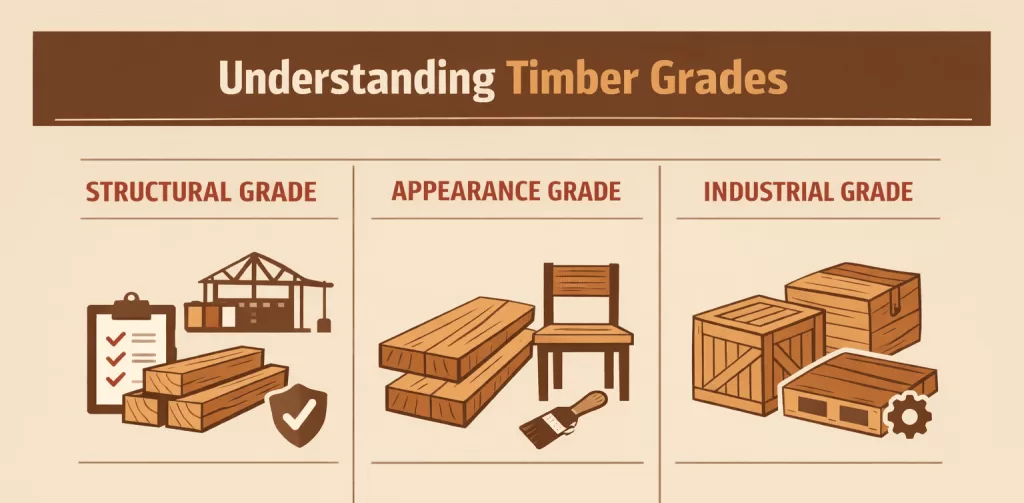
Understanding Timber Grades
Timber grading is important to ensure consistency, quality, and suitability for specific applications. Grades are typically determined based on factors such as strength, appearance, and the presence of defects.
Structural Grade
Structural timber is graded for strength and load-bearing capacity.
Key features:
- Tested for durability and performance
- Used in construction and heavy-duty applications
- Must meet strict industry standards
Appearance Grade
Appearance-grade timber focuses on visual quality.
Key features:
- Fewer knots and defects
- Smooth and consistent finish
- Ideal for visible applications such as furniture and interior design
Industrial Grade
Industrial-grade timber is used where appearance is less important.
Key features:
- More cost-effective
- Suitable for packaging, pallets, and crating
- Focus on functionality rather than aesthetics
Common Uses of Solid Timber in Malaysia
Solid timber is widely used across various industries due to its adaptability and strength.
Construction and Infrastructure
Timber is used for structural frameworks, supports, and temporary works in construction projects. Its strength and availability make it a reliable building material.
Furniture Manufacturing
Solid timber is a popular choice for furniture due to its natural appearance and durability. It is used to produce high-quality tables, chairs, cabinets, and more.
Packaging and Crating
Many industries rely on solid timber for pallets and crates to transport goods safely. It provides the strength needed to handle heavy loads and protect products during shipping.
Industrial Applications
Solid timber is used in machinery support, platforms, and other industrial structures where durability is required.
Key Factors to Consider When Choosing Solid Timber
Selecting the right timber involves more than just choosing between hardwood and softwood.
Consider the following:
- Load requirements and strength needs
- Environmental exposure (moisture, humidity)
- Budget and cost efficiency
- Compliance with industry standards
- Availability from a reliable solid timber wood supplier Malaysia
Working with an experienced supplier ensures you get consistent quality and the right specifications for your project.
Conclusion
Solid timber remains a vital material for businesses across Malaysia due to its strength, versatility, and reliability. By understanding the different types, grades, and uses, companies can make informed decisions that improve performance and cost efficiency.
Partnering with a trusted solid timber wood supplier Malaysia ensures access to high-quality materials that meet your project requirements and industry standards.
Frequently Asked Questions (FAQs)
What is solid timber used for?
Solid timber is used in construction, furniture manufacturing, packaging, and industrial applications due to its strength, durability, and versatility.
What is the difference between hardwood and softwood?
Hardwood comes from broad-leaf trees and is denser and more durable, while softwood comes from coniferous trees and is lighter, more affordable, and easier to work with.
How are timber grades determined?
Timber grades are based on factors such as strength, appearance, and the presence of defects. Common categories include structural grade, appearance grade, and industrial grade.
Is solid timber better than engineered wood?
Solid timber offers natural strength and durability, making it ideal for heavy-duty and long-term applications, while engineered wood is often used for cost efficiency and consistency.
Why choose a solid timber wood supplier in Malaysia?
A reliable solid timber wood supplier Malaysia ensures consistent quality, proper grading, and a steady supply of materials that meet industry standards and project requirements.
About the Author

The Benwoods Packaging Insights Team brings years of experience in manufacturing and supplying high-quality wooden crates across Malaysia. Specializing in custom storage and shipping solutions, they provide expert guidance to help businesses protect goods, optimize logistics, and improve warehouse efficiency. Their insights are grounded in practical industry knowledge and proven expertise.
