Introduction
Timber is widely used across construction, furniture manufacturing, and industrial applications in Malaysia. However, not all timber materials are free from defects. Even when sourcing from a solid timber wood supplier in Malaysia, it is important for buyers to understand how to identify potential defects before purchase.
Defects in timber can affect strength, durability, appearance, and long-term performance. Knowing what to look for helps prevent material failure and costly production issues.
Why Identifying Timber Defects Matters
Timber is a natural material, meaning variations are unavoidable. However, in industrial use, even minor defects can create major problems.
Common risks include:
- Structural weakness in finished products
- Poor product quality and finishing
- Higher maintenance costs
- Production delays due to material rejection
This is why proper inspection is essential before bulk purchasing.
Common Timber Defects and How to Identify Them
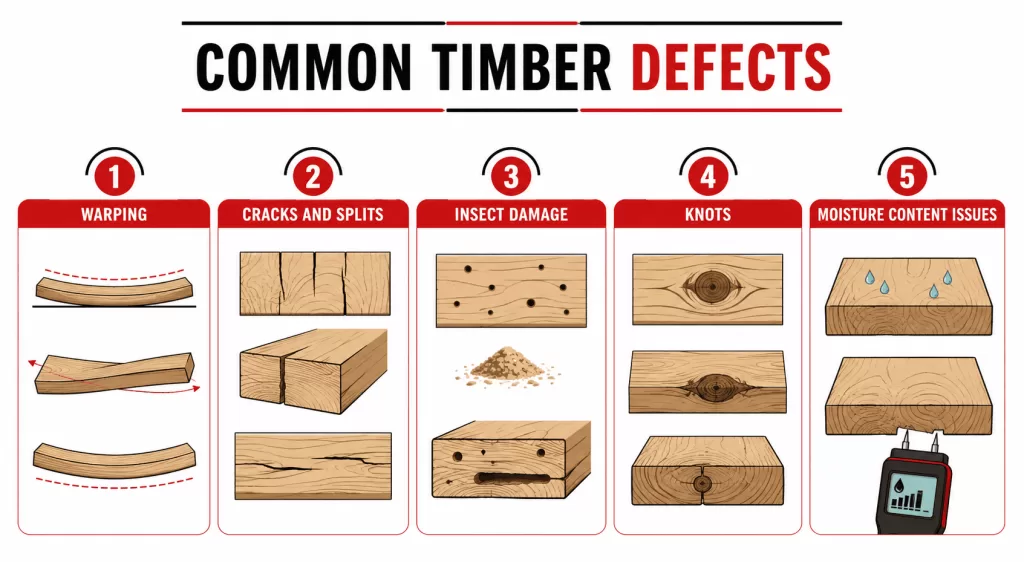
1. Warping
Warping happens when timber bends or twists due to uneven drying or moisture imbalance.
How to identify:
- Place timber on a flat surface
- Look for gaps or uneven contact
- Check for bending or twisting along length
Impact:
- Difficult assembly
- Misalignment in structural use
2. Cracks and Splits
Cracks often develop during drying or due to internal stress.
How to identify:
- Visible lines on surface
- Splits at ends of timber
- Deep grain fractures
Impact:
- Reduced strength
- Risk of breakage under load
3. Insect Damage
Caused by improper treatment or storage conditions.
How to identify:
- Small holes on surface
- Fine powder residue (borer dust)
- Hollow sound when tapped
Impact:
- Structural weakening
- Long-term deterioration
4. Knots
Knots are natural imperfections where branches once grew.
How to identify:
- Dark circular grain patterns
- Hard or soft uneven spots
Impact:
- Weak points in structural applications
- Affects finishing quality
5. Moisture Content Issues
Excess moisture is one of the most critical hidden defects.
How to identify:
- Heavier-than-normal timber
- Slight dampness on surface
- Requires moisture meter for accuracy
Impact:
- Warping after installation
- Risk of mold growth
Timber Defects Quick Reference Table
| Defect | How to Identify | Impact |
|---|---|---|
| Warping | Wood bends or twists | Misalignment, poor fit |
| Cracks | Visible splits in grain | Weak structure |
| Insect Damage | Holes, powder residue | Material deterioration |
| Knots | Dark circular grain spots | Weak points in strength |
| Moisture Issues | Damp feel, heavy wood | Warping, mold risk |
Role of a Solid Timber Wood Supplier in Malaysia
A reliable solid timber wood supplier in Malaysia ensures quality through strict control processes such as:
- Timber grading based on strength and quality
- Kiln drying to control moisture levels
- Defect inspection before distribution
- Proper storage conditions to prevent damage
- Consistent sourcing standards for industrial use
Working with an experienced supplier like Benwoods helps ensure consistent material quality and reduced production risks.
Reliable Timber Supply for Industrial Use
Benwoods provides solid timber that meets consistent industrial standards in Malaysia, focusing on material quality and defect control.
Key quality controls include:
- Selection of timber based on industrial-grade requirements
- Inspection for common defects such as warping, cracks, and insect damage
- Moisture level control to reduce post-delivery deformation
- Sorting to ensure suitability for construction and manufacturing use
This ensures the timber supplied is suitable for construction, furniture production, and other industrial applications where consistency is critical.
Get Reliable Solid Timber for Your Project
Looking for reliable solid timber for your next project in Malaysia? Benwoods supplies industrial-grade timber with consistent quality and controlled defect management to support construction, furniture, and manufacturing needs.
Conclusion
Understanding timber defects before purchase is essential for ensuring product quality, durability, and cost efficiency. Issues such as warping, cracks, insect damage, and moisture imbalance can significantly affect performance if not identified early.
By sourcing from a trusted solid timber wood supplier in Malaysia, buyers can ensure better material consistency, reduced waste, and improved production reliability.
Frequently Asked Questions (FAQs)
How can I tell if timber is good quality before buying?
You can check for straightness, surface cracks, insect holes, and moisture levels. High-quality timber should feel solid, have consistent grain, and show no visible warping or damage.
What are the most serious defects to avoid when buying timber?
The most serious defects include deep cracks, insect infestation, severe warping, and high moisture content, as these directly affect strength and durability.
Does kiln-dried timber guarantee better quality?
Kiln-dried timber generally has lower moisture content, which reduces the risk of warping and cracking. However, proper grading and inspection are still necessary.
Why does timber warp after delivery or installation?
Warping usually happens due to moisture changes in the environment or improper drying before purchase, causing the wood to expand or contract unevenly.
What should I ask a timber supplier before placing a bulk order?
You should ask about grading standards, moisture content levels, treatment processes, and whether the timber has been kiln-dried and inspected for defects.
About the Author

The Benwoods Packaging Insights Team brings years of experience in manufacturing and supplying high-quality wooden crates across Malaysia. Specializing in custom storage and shipping solutions, they provide expert guidance to help businesses protect goods, optimize logistics, and improve warehouse efficiency. Their insights are grounded in practical industry knowledge and proven expertise.
