Introduction
In industrial and logistics operations, wooden pallets are often seen as a simple tool for moving goods, but the wrong choice can lead to hidden costs, operational inefficiencies, and environmental waste. From frequent replacements to damaged products during handling, poorly selected pallets can silently inflate your supply chain expenses.
By focusing on cost optimisation and sustainability, businesses can choose pallets that last longer, protect cargo effectively, and reduce environmental impact. This guide explains how end users can maximise value from wooden pallets while meeting operational and export requirements.
Understanding Total Lifecycle Costs of Wooden Pallets
The upfront cost of a pallet is only a small part of the total expense. Lifecycle costs include:
- Maintenance & Repair: Replacing broken slats, re-fastening boards, or reinforcing decks
- Replacement Frequency: Frequent pallet failure increases both procurement and labour costs
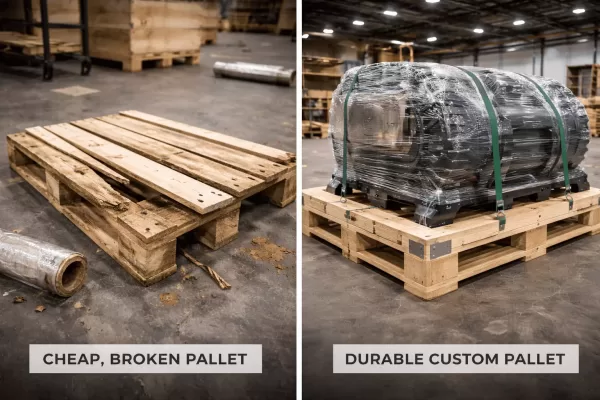
- Product Damage: Pallet failures can cause cargo loss, insurance claims, and customer dissatisfaction
- Operational Inefficiency: Substandard pallets can slow loading/unloading, requiring more labour hours
Tips: Investing in slightly higher-quality or custom-designed pallets often reduces these hidden costs over time, making operations more predictable and cost-efficient.
Sustainable Pallet Solutions for Modern Supply Chains
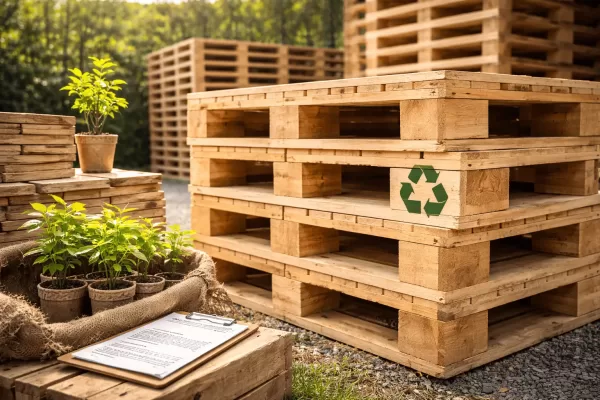
Sustainability is no longer optional; it impacts corporate responsibility, compliance, and operational branding. Wooden pallets offer eco-friendly advantages when sourced and managed responsibly.
Eco-Conscious Practices
- Sustainably Sourced Timber: Reduces deforestation and supports responsible forestry
- Reusable & Repairable Designs: Extend the service life of pallets, lowering material consumption
- Recyclable Materials: End-of-life pallets can be repurposed or recycled instead of being discarded
- Optimised Design: Smaller or modular pallets reduce timber usage without compromising strength
Benefits: Sustainable pallets not only reduce environmental footprint but can also lower long-term operational costs by minimising material waste.
Custom Pallets: Solving Unique Operational Challenges
Standard pallets are not always suitable for heavy, irregular, or sensitive cargo. Custom pallets offer solutions for these challenges:
- Irregular Loads: Designed to support oversized or unevenly shaped goods
- High-Value Equipment: Extra bracing and secure structures protect expensive items
- Temperature-Sensitive Goods: Pallets integrated with liners or spacers maintain product quality during transit
- Heavy Machinery: Reinforced pallets withstand dynamic loads and repeated handling
By selecting custom solutions, businesses can prevent costly damages and improve handling safety.
Export and Compliance Considerations
International shipments require pallets that meet regulatory standards, avoiding delays or rejections at destination ports.
Key Export Features
- ISPM 15 Heat-Treated Timber: Prevents pest contamination and complies with global phytosanitary regulations
- Clear Compliance Markings: Streamline customs inspections
- Structural Strength: Supports container stacking, long transit, and frequent handling
- Container Optimisation: Reduces empty space, improving shipping efficiency and lowering costs
End-user benefit: Export-ready pallets protect cargo and reduce risk, ensuring smooth global operations.
Operational Benefits Across Industries
Wooden pallets are versatile assets in industrial, warehousing, and logistics workflows:
Manufacturing & Production
- Safely transport raw materials and finished products within facilities
Warehousing & Distribution
- Support racking systems, improve stack stability, and enhance throughput efficiency
Logistics & Freight Operations
- Enable smoother handling by forklifts and pallet jacks, reducing manual errors
Construction & Heavy Industry
- Reinforced pallets handle bulky or high-density equipment and materials
Export & International Trade
- Compliant pallets reduce delays and ensure product safety across borders
By aligning pallet selection with operational requirements, end users optimise efficiency, reduce risk, and save costs.
Custom vs Standard Pallets: Cost and Sustainability Comparison
| Feature | Custom Wooden Pallets | Standard Wooden Pallets |
| Fit & Dimensions | Tailored to load | Generic sizes, may require adjustment |
| Load Capacity | Engineered for specific weight & balance | Moderate, less optimised for heavy loads |
| Durability | High; designed for repeated use | Moderate; higher replacement frequency |
| Product Protection | Superior; reduces damage | Basic protection; more risk of cargo damage |
| Export Compliance | Built for ISPM 15 | May require treatment or modification |
| Long-Term Cost | Lower overall lifecycle cost | Lower upfront, higher long-term cost |
| Sustainability | Optimised materials, reusable, recyclable | Standard timber use; less efficient |
Pallet Production Process with Quality Assurance
1. Requirement Assessment
Evaluate operational needs, load types, storage systems, and handling conditions.
2. Design & Fabrication
Select timber, reinforce structures, and build according to load specifications.
3. Quality Control
Inspect pallets for structural integrity, compliance, and handling performance.
4. Delivery & Deployment
Delivered ready for immediate use in warehouses, factories, or export shipping.
Conclusion
Wooden pallets are more than transport tool, they’re operational assets that impact safety, efficiency, sustainability, and cost. By choosing pallets that are durable, customisable, and export-ready, businesses reduce total lifecycle costs, protect cargo, and support sustainable supply chains.
Explore Benwoods to help design cost-effective, reliable, and environmentally responsible wooden pallets for industrial and export operations.
About the Author

The Benwoods Packaging Insights Team brings years of experience in manufacturing and supplying high-quality wooden crates across Malaysia. Specializing in custom storage and shipping solutions, they provide expert guidance to help businesses protect goods, optimize logistics, and improve warehouse efficiency. Their insights are grounded in practical industry knowledge and proven expertise.
Frequently Asked Questions (FAQs)
How can custom pallets save money in the long run?
By reducing product damage, handling errors, and replacement frequency.
Are sustainable pallets more expensive upfront?
Slightly, but they reduce lifecycle costs and environmental impact.
Can pallets be reused multiple times?
Yes, repairable and reinforced pallets can be reused many times.
Do you supply pallets suitable for international shipping?
Yes. Heat-treated, ISPM 15-compliant pallets ensure smooth customs clearance.
