
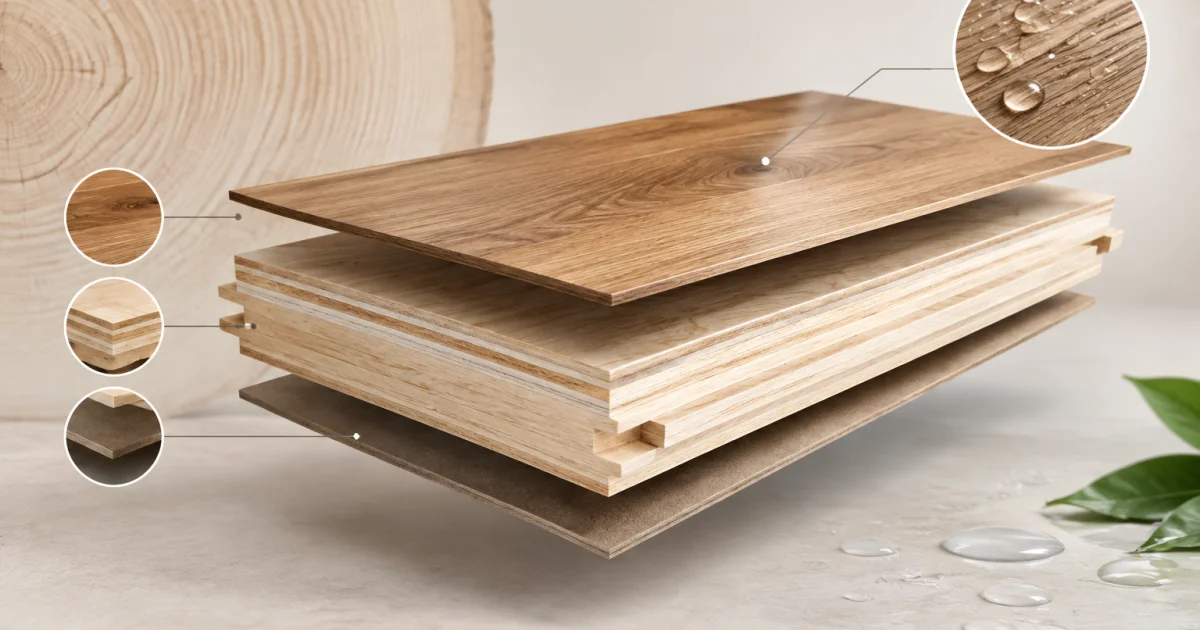
Engineered wood flooring can deliver real timber warmth with better dimensional stability than solid planks—if you specify it properly. In Malaysia’s humidity and mixed site conditions (new builds, renovations, air-conditioned interiors, and high-traffic areas), most failures trace back to preventable gaps in the specification: unclear layer construction, unsuitable wear layer thickness, and missing moisture requirements.
This tutorial helps interior designers, contractors, and project teams write a purchase-ready scope (especially for comparing quotations). Lock in three pillars before ordering: (1) layer structure, (2) wear layer/veneer, and (3) moisture management from substrate to installation. This is particularly important when comparing Engineered wood flooring malaysia options, where products with the same thickness can perform very differently.
Step 1: Confirm the project brief and performance requirements (before you pick a plank)
A sample board is not a specification. Start by documenting how the space will be used so the supplier can propose the right construction and installation system.
Define these essentials in your flooring brief
- Space type: residential, office, retail, hospitality, corridors, meeting rooms, etc.
- Traffic and wear risk: footfall, rolling loads (chairs/trolleys), grit at entrances, and cleaning method.
- Environmental control: full-time air-conditioning vs mixed ventilation; temperature/humidity swings when AC is off.
- Moisture risk factors: ground-floor slabs, near pantry/wet zones, balcony doors, frequent mopping.
- Subfloor type: concrete/screed, tiles, plywood, raised access floor, existing timber.
- Acoustic needs: impact sound requirements, underlay expectations, and allowable floor height build-up.
A clear brief reduces guesswork and prevents “same thickness, different performance” surprises across suppliers.
Step 2: Specify the layer structure that matches site reality
Engineered wood flooring is a layered product. Your spec should state how the plank is built, not only species or colour. Construction drives stability, resistance to cupping, and tolerance to humidity changes.
Choose a construction type (and write it into the spec)
Common constructions include:
- Multi-ply plywood core: cross-laminated plies for stability; often preferred for humidity swings and wider boards.
- Lamella / hardwood strip core: finger-jointed or strip timber core; performance depends heavily on core quality and bonding.
- HDF core: dense core often paired with click systems; can perform well in controlled interiors, but joints/edges must be protected from water exposure.
What to write: “Engineered wood flooring, [plywood / strip-lamella / HDF] core, factory-bonded, balanced backing layer, suitable for Malaysian interior climate conditions.”
Specify total thickness and width with stability in mind
Don’t choose thickness only for door clearance. Wider/longer planks and feature formats can look premium but demand higher stability and tighter moisture control. If the design calls for extra-wide boards or patterns, confirm the supplier’s approved construction and method for that format.
Practical tip: For herringbone engineered wood flooring, the pattern creates more joints and tighter tolerances. Confirm the recommended plank size range and the approved installation method (often glue-down for pattern stability, depending on the system).
Demand a “balanced” plank build-up
A balanced plank uses a top veneer, core, and backing that counter movement. If the backing is too thin or incompatible, boards can warp, crown, or behave inconsistently.
- Ask the supplier to confirm the product is balanced and suited to your installation method.
- Request what the backing layer is (material and purpose: stability, moisture moderation, bonding support).
Step 3: Specify the wear layer (veneer) and surface performance you actually need
The wear layer is the real wood layer on top. It affects appearance, dent resistance (with species), potential refinishing, and long-term value.
Write the wear layer thickness and veneer type into the spec
Don’t accept “engineered timber” without a defined veneer. Require:
- Wear layer thickness (mm), plus tolerance if available.
- Veneer cut (e.g., sawn vs sliced) where relevant to the look and stability.
- Grade/character (uniform/natural/rustic) to control knots and colour variation expectations.
Refinishing reality check: “Refinishable” depends on veneer thickness, floor flatness over time, and whether the finish system supports sanding. If refinishing matters, make it a written requirement and confirm realistic sanding limits for that exact product.
Match the finish system to the maintenance plan
State the finish system so expectations are aligned on durability, repairability, and cleaning:
- UV lacquer / polyurethane: durable and generally easier for routine cleaning.
- Hardwax oil: more natural look and spot-repair potential, but needs a clearer maintenance regime.
For commercial/public-facing areas, confirm stain resistance expectations and cleaning method. Require the supplier to provide written care guidance aligned to the finish.
Consider species suitability (example: Merbau)
Species influences hardness, colour behaviour, and overall aesthetics. For a durable tropical hardwood look, Merbau is commonly considered in Malaysian projects. Ensure supply/manufacturing consistency and that the finish system matches expected wear.
For a reference point during tendering, Benwoods’ Merbau Flooring page can help align discussions on species, finish options, and intended applications.
Step 4: Build moisture control into the specification (subfloor, acclimatisation, installation)
Moisture is the main driver of movement issues such as gapping, cupping, and edge swelling. In Malaysia, risk comes from both wet exposure and fluctuating humidity—plus screeds that are rushed into finishing stages.
Subfloor readiness: require moisture testing and documentation
Instead of debating whether a slab is “dry enough,” specify a process:
- Moisture testing is mandatory before installation (method agreed with supplier/installer based on site conditions).
- Record and retain results for handover documentation.
- Flatness and cleanliness requirements (level tolerance; no dust, paint, or curing compounds that affect adhesion).
This protects the design team and gives the contractor a clear checklist while enabling the supplier to recommend the correct adhesive and moisture barrier system.
Moisture barrier / underlay: specify the system, not just “provide underlay”
Moisture protection should match the method and substrate:
- Glue-down on screed: may require a compatible moisture barrier/primer depending on measured moisture and risk.
- Floating installation: typically uses underlay plus a vapour barrier layer (where appropriate) for vapour control and acoustics.
- Over existing tiles: needs extra attention to bonding, flatness, and potential trapped moisture.
What to write: “Provide moisture management system suitable for engineered wood flooring over [screed/tile/plywood], including vapour control layer or primer as recommended by flooring manufacturer, based on recorded moisture test results.”
Acclimatisation and storage: include site rules
- Store boards in a dry, enclosed area away from wet trades and direct sunlight.
- Do not open packaging early unless instructed by the supplier.
- Keep site ventilation/air-conditioning during installation as close as practical to intended occupancy conditions.
Movement allowances: expansion gaps and transitions
Require expansion gaps at perimeters and fixed vertical elements, and transitions where runs become too large or where environments change (e.g., balcony doors, pantry thresholds). These details are part of the floor’s engineering, not optional workmanship.
Step 5: Turn your choices into a purchase-ready specification (template + checks)
Once construction, wear layer, and moisture approach are defined, formalise them so quotations are comparable and site execution is consistent.
A simple spec template you can adapt
| Spec item | What to state |
|---|---|
| Product type | Engineered wood flooring, interior use, compatible with Malaysian humidity conditions |
| Construction | Plywood / strip-lamella / HDF core; balanced build-up; backing layer type |
| Dimensions | Plank thickness, width, length range; pattern requirement (straight / herringbone) |
| Wear layer | Veneer species and wear layer thickness; grade/character expectations |
| Surface finish | UV lacquer / hardwax oil; sheen level; maintenance guidance to be provided |
| Subfloor & moisture | Moisture testing required; barrier/underlay system; flatness requirements |
| Installation method | Glue-down / floating; adhesive system compatibility; perimeter expansion gaps |
| Samples & approval | Approval of sample board + confirmation of allowable natural variation |
Shortlist suppliers using “compare-able” questions
When evaluating a Timber flooring supplier malaysia, use questions that expose engineering competence (not just catalogue range):
- Can you confirm the core construction and backing layer, and explain why it suits this site?
- What moisture testing and moisture barrier approach do you require for warranty validity (if any)?
- For herringbone layouts, what plank size and installation method do you recommend?
- What is the finish system, and what cleaning/maintenance is recommended?
- What site conditions would cause you to delay installation?
Specific, documented answers reduce risk and make installation and handover easier to defend.
Conclusion: specify stability first, beauty second (and you’ll get both)
Engineered wood floors perform best when the specification reflects how the product is built and how the site behaves. Define a balanced construction suited to plank format, write wear layer and finish requirements clearly, and treat moisture as a design input—not an afterthought. You’ll significantly reduce common issues like gapping, cupping, and premature wear on Malaysian projects.
If you are still deciding between engineered and solid timber approaches, Benwoods’ guide may help: Engineered Wood Flooring Vs Solid Hardwood Flooring In Malaysia.
For project sourcing, you can also review Products to align materials, finishing options, and supply scope before requesting a quote.
Frequently Asked Questions
What wear layer thickness should I specify for engineered wood flooring?
Specify the wear layer (veneer) thickness in writing because it affects long-term value and whether refinishing is realistic. The “right” thickness depends on traffic level, maintenance expectations, and whether future sanding is part of the client brief. If refinishing matters, make it an explicit requirement and confirm the supplier’s guidance on sanding limits for that exact product.
Is herringbone engineered wood flooring suitable for Malaysian homes and commercial projects?
Yes, herringbone can work well in Malaysia, but it is less forgiving than straight-lay because it has more joints and tighter tolerance demands. Specify a stable construction (often a multi-ply core is preferred), confirm the recommended plank size for herringbone, and align on an installation method that controls movement (commonly glue-down depending on the system). Moisture testing and subfloor flatness become even more critical.
Should I choose plywood core, HDF core, or strip-lamella core?
All can perform, but they behave differently. Plywood multi-ply cores are widely chosen for stability, especially for wider boards or variable humidity. HDF cores are common in click systems and suit controlled interior conditions, but they need careful edge protection from water exposure. Strip-lamella cores depend heavily on manufacturing quality and bonding—so ask the supplier to explain the build-up and suitability for your site conditions.
What moisture requirements should be included in an engineered wood flooring specification?
Include a process requirement: moisture testing before installation, documentation of results, and installation only when the subfloor meets the supplier’s limits. Specify the moisture management system (vapour barrier, primer, underlay) as recommended for the measured site conditions and installation method. Also include acclimatisation/storage rules and perimeter expansion gaps.
How do I compare quotations from different timber flooring suppliers fairly?
Compare like-for-like specifications: core construction type, total thickness and plank dimensions, wear layer thickness, finish system, and the proposed moisture barrier/underlay and installation method. If one quote is missing these details, it is not truly comparable. Ask each supplier to confirm what site conditions would cause them to delay installation and what documentation they provide for subfloor readiness and care instructions.
Need help finalising an engineered wood flooring specification?
Benwoods supports Malaysian interior and construction projects with engineered timber solutions, including Merbau Timber Flooring and processed timber options. Share your project brief (space type, plank format, subfloor, and moisture constraints) and we’ll help you align layer construction, wear layer requirements, and an installation-ready scope that’s easier to quote and execute.
