
Choosing timber flooring is one of those decisions that looks simple on a mood board but becomes technical once you start collecting quotations. One supplier talks about “select grade”, another offers “mixed grade”, a third says “engineered is safer”, and then everyone has a different lead time. If you’re a first-time buyer—whether you’re a homeowner, interior designer, contractor, or developer—your goal is the same: get flooring that looks right, performs in Malaysia’s climate, arrives on time, and is supported properly on site.
This guide is written to help you evaluate a Timber flooring supplier malaysia without guesswork. You’ll learn how timber flooring is graded, how to compare species, what affects lead times, what site support should look like, and which questions protect your budget and timeline.
Start with the right scope: what exactly are you buying?
Before comparing suppliers, clarify your scope. “Timber flooring” can refer to several product types and services bundled together. If you compare apples to oranges, the “cheapest” quote can become the most expensive after variations and rework.
Common timber flooring types you’ll see in Malaysia
- Solid timber flooring: Each plank is one piece of wood. It can be sanded and refinished multiple times, but it is more sensitive to moisture movement (expansion and shrinkage) if the site conditions are not controlled.
- Engineered wood flooring: A real wood top layer (wear layer) bonded to a stable multi-layer core. It typically handles day-to-day humidity changes better and can be a practical choice for apartments, commercial fit-outs, or where air-conditioning use varies.
- Parquet / patterned timber: Smaller blocks arranged in patterns. It can look premium but requires good substrate flatness and careful installation.
When a supplier quotes “Hardwood flooring malaysia”, confirm if they mean solid hardwood planks, engineered hardwood with a hardwood veneer, or a mix of specifications depending on stock. These are not interchangeable.
Services that may or may not be included
- Site measurement and moisture checks
- Subfloor assessment (screed, plywood, existing tiles)
- Supply only vs supply + install
- Skirting, trims, stair nosing, and transitions
- Acclimatisation plan (how long materials rest on site)
- After-installation touch-ups and maintenance briefing
Action step: ask every supplier to write clearly what is included and excluded. If you’re a designer or main contractor, ask for a line-by-line scope so you can avoid disputes later.
Understanding grades: what “select”, “standard”, and “mixed” really mean
Grading is one of the most misunderstood parts of buying timber flooring. A grade is not only about “quality”; it’s about visual character, allowable natural features, and sometimes structural tolerances. Different mills and brands can also define grades differently, so treat grade terms as a starting point—not a guarantee.
Typical grading factors
- Knots: size, frequency, and whether filled or open.
- Colour variation: how consistent the tone is across planks.
- Grain pattern: straight grain vs more varied cathedral grain.
- Mineral streaks / sapwood: some species show these naturally.
- Checks and splits: small surface cracks may be acceptable in character grades.
- Machining tolerance: consistency of tongue-and-groove fit and plank straightness.
How to compare grades safely
Instead of relying on the grade name alone, ask for:
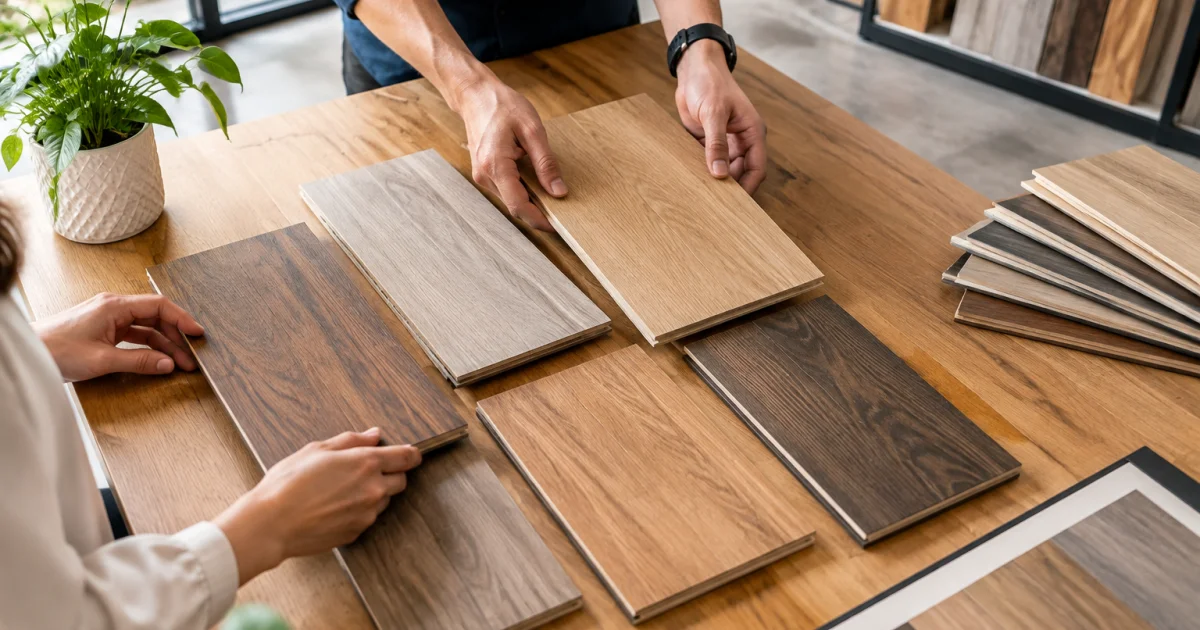
- Large physical samples (not only a small offcut). Ideally, view multiple planks side-by-side.
- A written grade description that lists what is allowed (knot size limits, sapwood allowance, etc.).
- Photos of recent batches taken in normal lighting (not heavily edited). Lighting changes perception dramatically.
Practical example: If you want a calm, uniform floor for a modern condo, “select” or “prime” style grades (low knots, consistent colour) can match your vision. If you’re designing a café or a landed home with a rustic theme, a character grade with knots and variation can look more authentic—and may reduce waste because fewer planks are rejected for appearance.
Waste factor: the hidden cost tied to grade expectations
First-time buyers often underestimate wastage. Even with good grading, installers will cut around defects, match tones, and manage end joints. Ask the supplier what waste factor they recommend for your plank size and layout. Your project may need extra allowance for:
- Herringbone or chevron patterns
- Multiple rooms with different directions
- Stairs, landings, and curved edges
- Strict visual selection on site (high uniformity requirement)
A professional supplier should help you set a realistic allowance so you don’t run short mid-installation and end up with batch variation issues later.
Species selection: how to pick timber that performs in Malaysian homes and projects
Species is not just about colour. It affects hardness, stability, grain, and how a finish will look over time. For commercial investigation buyers, the goal is to shortlist 2–3 species that fit your design intent and practical constraints (traffic, moisture risk, maintenance, budget).
What to evaluate beyond the showroom colour
- Dimensional stability: how the wood reacts to humidity changes. A stable product reduces gaps and cupping risk when site conditions fluctuate.
- Hardness and dent resistance: important for high-traffic areas, retail spaces, and homes with kids or pets.
- Grain and pore structure: open-pore species can show more texture and may need different finishing expectations.
- Natural colour movement: many timbers darken or mellow with light exposure. Ask what to expect after a few months of use.
- Finishing compatibility: some species accept stain differently; some look best with clear coats to highlight natural tone.
Merbau as a common reference point
Merbau is a well-known hardwood choice in Malaysia because of its rich colour and reputation for durability. If you are considering Merbau, confirm the specification and service scope with the supplier. For example, Benwoods supplies Merbau Flooring for projects that want a hardwood look suited for residential and commercial interiors.
Action step: ask for a sample finished in the exact coating system proposed (not just raw wood). The same species can look very different depending on sheen level (matt vs semi-gloss), staining, and the number of coats.
Solid vs engineered: deciding based on the site, not only preference
Many first-time buyers get stuck on whether solid timber is “better” than engineered. A better way to decide is to match product type to your site realities:
- If your site has stable indoor conditions (consistent air-conditioning, controlled moisture, good subfloor), solid timber can be a strong choice, especially if long-term refinishing is a priority.
- If your site conditions vary (intermittent air-conditioning, higher humidity exposure, apartments with concrete slabs), engineered wood flooring can reduce movement-related issues when installed correctly.
If you want a deeper comparison, you can continue with a specialised read: Engineered Wood Flooring Vs Solid Hardwood Flooring In Malaysia.
Specification checklist: the details that make quotes comparable
Two quotations can both say “timber flooring” and be completely different products. Use this checklist to compare suppliers fairly and avoid surprises.
Core product specs to confirm
- Plank thickness (and wear layer thickness for engineered flooring)
- Plank width and length range (random lengths vs fixed lengths)
- Moisture content target and conditioning method (kiln-dried, acclimatised)
- Profile: tongue-and-groove, click system, micro-bevel edges (if any)
- Surface texture: smooth, brushed, hand-scraped look
- Finish system: UV lacquer, oil-based finish, water-based coating; matt/satin/gloss level
- Grade definition (written, not only a label)
Installation system and accessories
- Installation method: nail-down, glue-down, floating, or hybrid systems
- Subfloor requirements: allowable moisture level, flatness tolerance
- Underlay: type and thickness if floating (acoustic requirements for condos)
- Adhesive and primer: brand/type compatibility with screed and timber
- Skirting and trims: material, height, finishing, corners
Practical example: A “supply only” price might look attractive, but if the flooring needs a specific adhesive, moisture barrier, or levelling work, the installed cost can exceed a supplier who provided a complete system quote upfront.
Ask about processing and consistency
Consistent machining reduces installation delays. Suppliers who also handle timber processing may be able to control these variables better for custom requirements. If you need matching profiles, skirting, or custom trims, ask whether the supplier provides timber processing and finishing support. For example, Benwoods offers Processed Timber Finishing, which can be relevant when a project requires specific timber preparation for interior works.
Lead times and availability: how to plan your renovation or construction schedule
Lead time is not just “how fast the supplier can deliver.” It’s a chain of steps that may include material sourcing, processing, conditioning, finishing, packing, and delivery scheduling. Understanding the workflow helps you plan realistically—especially if you’re coordinating carpentry, painting, M&E, and handover deadlines.
What commonly affects lead times
- Stock vs made-to-order: stock items can move faster, while custom profiles, widths, or finishes require production time.
- Batch preparation: matching colour tone and grade selection can extend preparation time.
- Moisture conditioning: rushing this step can increase future movement risk.
- Finishing schedule: factory finishing requires curing time and QA checks.
- Project sequencing: flooring is usually installed after heavy wet works are complete and the site is reasonably dry.
How to request a lead time you can rely on
Ask suppliers to break the timeline into stages rather than giving a single date. A simple, practical breakdown looks like:
- Estimated confirmation-to-production start
- Production / finishing period
- Quality check and packing
- Delivery window
- Recommended acclimatisation period on site (before installation)
Action step for contractors and designers: align the delivery date with site readiness, not with the earliest possible delivery. Flooring delivered too early can be exposed to dust, wet works, paint overspray, or storage moisture—problems that create costly claims later.
Batch control: a first-time buyer’s risk
Timber is a natural material. Two batches can vary in tone even within the same species and grade. To reduce the risk:
- Order enough quantity from the same batch for the full area (including waste allowance).
- Ask the supplier how they label batches and handle top-up orders.
- For phased projects, discuss batch reservation or planned deliveries in advance.
Site support: what good suppliers do before, during, and after installation
Many flooring issues are not caused by the wood itself, but by site conditions and installation decisions. Site support is where an experienced supplier protects both the buyer and the installer by preventing avoidable failures.
Before installation: site readiness checks
Ask what checks the supplier performs or recommends. Common checks include:
- Subfloor moisture assessment (especially for concrete slabs)
- Flatness inspection to reduce hollow spots and squeaks
- Site humidity and ventilation discussion (air-conditioning usage patterns)
- Wet work completion confirmation (plastering, tiling, screed curing)
Practical example: If a condo unit still has ongoing bathroom waterproofing or frequent mopping during cleaning, it may be better to delay timber installation. A supportive supplier will tell you that honestly because it reduces risk for everyone.
During installation: coordination and on-site decisions
Even with perfect materials, installers make many micro-decisions: plank selection, colour blending, direction, expansion gaps, and transitions at doorways. Ask whether the supplier can support with:
- Guidance on layout direction (to reduce visible joints and improve flow)
- Expansion gap recommendations around walls and fixed cabinets
- Transition detailing between timber and tile/vinyl/stone
- Problem-solving when the subfloor is not as expected
After installation: handover, maintenance, and minor rectification
First-time buyers often want to know, “How do I keep it looking like the showroom?” A good supplier should provide a simple maintenance briefing covering:
- Cleaning do’s and don’ts (too much water is a common mistake)
- Felt pads and furniture movement guidance
- What to do with minor scratches (product-specific advice)
- When to call for inspection (unusual gaps, cupping, persistent squeaks)
Action step: request the recommended cleaning method in writing so your client, site team, or facility manager follows consistent instructions.
How to assess a supplier: questions that reveal capability (without being technical)
You don’t need to be a timber expert to choose well. You need a repeatable way to check whether a supplier understands your project and can support it end-to-end.
Supplier evaluation questions (use these on calls and showroom visits)
- Can you show multiple planks from the same grade? One “perfect” sample board is not enough.
- What is the recommended installation method for my site? Listen for reasoning based on slab type, humidity, and usage—not just preference.
- What are the subfloor requirements? A supplier who cannot explain flatness/moisture basics may be under-scoping.
- How do you handle colour variation and batch matching? Clear process reduces disputes.
- What are the lead time stages? A staged answer is more reliable than “about X weeks” with no detail.
- What does your after-sales support look like? Clarify response process for issues.
For designers and contractors: documentation you should ask for
- Written product specification sheet
- Care and maintenance guide
- Installation guidelines (or installer responsibility statement)
- Confirmation of what constitutes acceptable natural variation
If your project includes other interior woodworks (custom cabinetry components, timber trims), it can be helpful to work with a supplier that supports broader timber needs. For example, Benwoods also provides Furniture Components Interior Woodwork, which may simplify coordination when you need consistent timber tone across multiple interior elements.
Budgeting for the real cost: beyond “price per square foot”
First-time buyers naturally focus on the flooring rate, but timber flooring projects can fail on budgeting if the quote doesn’t reflect the real site requirements. A smart budget considers the entire flooring system and the project constraints.
Cost items buyers commonly miss
- Subfloor preparation: levelling compound, grinding, crack repair, moisture barrier systems
- Skirting and finishing carpentry: height, profile, painting or finishing
- Door trimming: clearance for flooring thickness and underlay
- Stairs and nosing details: often priced separately
- Waste allowance: especially for patterns and strict selection
- Protection after installation: floor covering during remaining renovation works
Value checks: what “good value” looks like
Better value usually means fewer risks and fewer surprises, not just a lower rate. Signs of value include:
- Clear, comparable specifications
- Consistent sample-to-delivered appearance expectation management
- A realistic lead time plan aligned with site readiness
- Availability of support for moisture, installation method, and detailing
If you’re still deciding between timber and another material, it can help to compare performance expectations and maintenance differences. You may find this comparison useful: Timber Flooring Vs Vinyl Flooring In Malaysia Which Is Better.
Quick decision framework: match product + supplier to your project type
To make this guide practical, here’s a simple framework you can use in meetings. Start from your project type, then narrow down product choice and supplier capability.
Homeowners (condo and landed homes)
- Prioritise stable performance, easy maintenance, and consistent appearance.
- Ask how the product behaves with your air-conditioning habits.
- Confirm after-install care instructions and what to avoid (water, harsh chemicals).
Interior designers
- Prioritise sample accuracy and batch consistency for client approvals.
- Request clear grade descriptions and multiple planks for presentation.
- Confirm lead times early so the finish schedule doesn’t slip.
Contractors and flooring installers
- Prioritise machining consistency, system compatibility (adhesives/underlay), and responsive technical support.
- Confirm subfloor requirements and handover sequence to avoid rework.
- Align delivery and acclimatisation to your manpower planning.
Property developers and commercial projects
- Prioritise scalable supply, repeatability, and documentation.
- Discuss phased delivery, batch control, and inspection processes.
- Confirm maintenance guidance for facility management handover.
Conclusion: buy timber flooring with clarity, not assumptions
A successful timber flooring project is less about finding a “perfect” species and more about aligning the right product specification, grade expectations, timeline, and on-site practices. As a first-time buyer, your biggest advantages come from (1) comparing like-for-like specifications, (2) viewing real multi-plank samples, (3) planning lead times around site readiness, and (4) choosing a supplier who can support the installation reality—not just the showroom selection.
When you evaluate a timber flooring supplier, use the checklists in this guide to turn vague promises into clear deliverables. That is how you protect your design intent, schedule, and budget—while getting a floor that you can confidently hand over to a homeowner, tenant.
Frequently Asked Questions
How do I choose a reliable timber flooring supplier in Malaysia as a first-time buyer?
Shortlist suppliers who can show multiple planks from the same grade, explain subfloor requirements (moisture and flatness), provide a clear lead time by stages, and document what natural variation is acceptable. Reliability is usually proven through clarity: written specifications, realistic advice about site readiness, and a defined after-sales support process.
What’s the difference between solid timber flooring and engineered wood flooring?
Solid timber flooring is made from a single piece of wood and can be sanded/refinished multiple times, but it is more sensitive to humidity movement if site conditions fluctuate. Engineered wood flooring has a real wood top layer bonded to a more stable core, which often helps it handle day-to-day humidity changes better when installed with the correct system.
What does “grade” mean for timber flooring, and will the delivered floor match the sample?
Grade mainly describes visual character and allowable natural features such as knots, colour variation, and mineral streaks. Because wood is natural, the delivered floor may not look identical to a small sample. To reduce mismatch risk, ask to view several full-size planks, request a written grade description, and confirm how the supplier manages batch selection and colour variation.
How long is the typical lead time for timber flooring supply and installation?
Lead time depends on whether the flooring is stock or made-to-order, whether it needs factory finishing, and whether the site is ready (wet works completed, subfloor dry and flat). Instead of relying on a single number, request a staged timeline covering production/finishing, quality checks, delivery scheduling, and recommended acclimatisation time before installation.
Do I need a site visit or moisture check before installing hardwood flooring in Malaysia?
It’s strongly recommended. Many flooring problems come from subfloor moisture, unevenness, or installing too early while the site is still damp. A site assessment helps confirm the right installation method (glue-down, nail-down, floating), whether a moisture barrier is needed, and when the site is actually ready for timber flooring to perform well.
Planning a timber flooring project? Talk to Benwoods before you commit.
If you want help selecting species and grade, comparing solid vs engineered options, or planning realistic lead times and site readiness, Benwoods can support your first purchase with clear specifications and practical guidance.
We also supply Merbau timber flooring and provide processed timber finishing to match interior requirements—so you can coordinate materials more smoothly across your project.
