
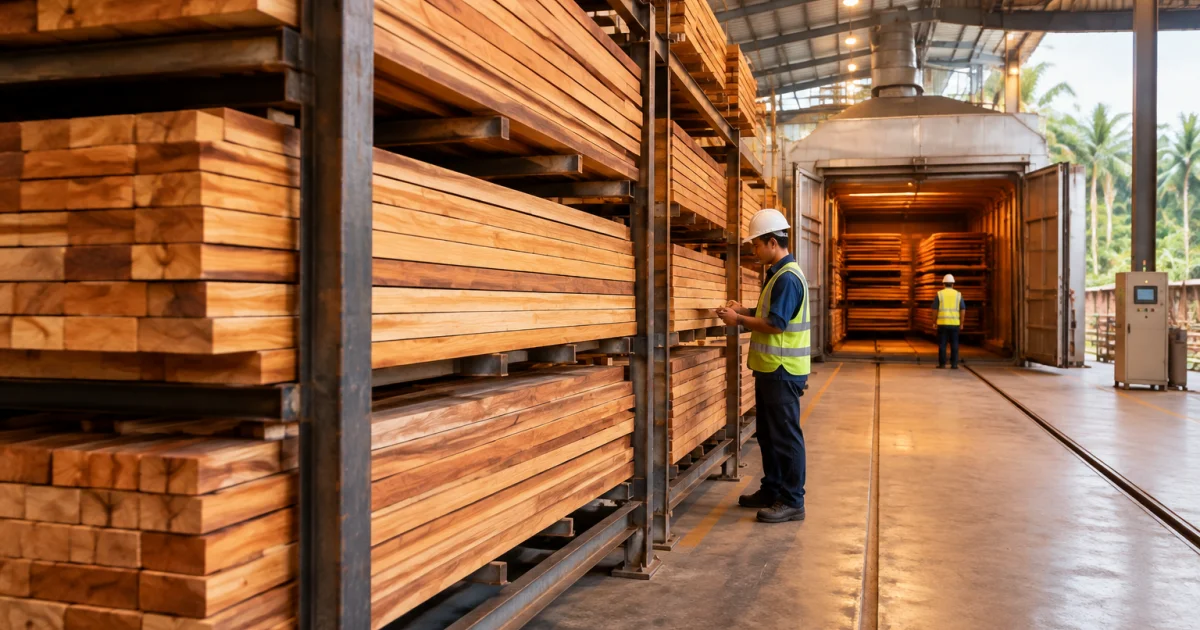
When people search for Hardwood flooring malaysia, the first questions are usually about timber species, colour, price, and installation. But for many buyers—especially importers, contractors, designers, and developers—the most expensive surprises come from the parts that don’t show in the showroom: treatment requirements (such as ISPM 15 in the right context), kiln drying and moisture control, and the documentation chain that proves what was supplied.
This article breaks those “behind-the-scenes” factors into practical checks you can apply before you purchase, before you ship, and before you install. The goal is to help you reduce project delays, avoid preventable defects (cupping, gaps, excessive movement), and clarify responsibilities between supplier, forwarder, and installer.
Important note: ISPM 15 is a phytosanitary standard primarily linked to wood packaging material (e.g., pallets, crates, dunnage), not the flooring itself. However, it can still matter to flooring buyers because flooring often ships with wooden supports, skids, pallets, or crates that must meet ISPM 15 rules for cross-border movement. Understanding where the standard applies will help you ask the right questions and avoid confusion at customs.
1) Start with the real supply chain: flooring boards vs. the wood used to ship them
Hardwood flooring can travel through multiple countries before reaching a Malaysian project: milling, profiling, finishing, packaging, consolidation, export clearance, sea freight or air freight, import clearance, warehouse storage, and last-mile delivery to site. At each step, the “wood in the system” may include:
- The flooring product: boards (solid wood flooring, engineered wood flooring, parquet formats), plus underlayment and accessories.
- Wood packaging material (WPM): pallets, skids, crates, bracing, and timber blocking used inside containers.
ISPM 15 focuses on WPM because untreated wood packaging can carry pests. For importers and contractors, that means the key question is often not “Is the floor ISPM 15?” but “Is the packaging ISPM 15-compliant, and is the documentation/marking correct for this shipment?”
Practical example: a container of timber flooring may be packed on a wooden pallet and reinforced with wooden braces. Even if the flooring is fully finished and wrapped, the container can be stopped if the pallet or bracing is non-compliant or incorrectly marked. The result can be delays, repacking costs, or disposal of packaging material—none of which you want happening near a project handover date.
2) ISPM 15: what it is, what it isn’t, and when it affects flooring shipments
ISPM 15 (International Standards for Phytosanitary Measures No. 15) is widely used for regulating wood packaging material used in international trade. The most common compliance route is heat treatment performed under an approved system, combined with correct marking.
For hardwood flooring buyers, ISPM 15 typically matters in three common scenarios:
- Imported flooring shipped on wooden pallets (or with wood dunnage/blocks). The WPM should be treated and properly marked.
- Custom crating for high-value finishes (e.g., premium boards, large-format planks, fragile surface coatings). The crate is WPM and should follow ISPM 15 practices when applicable.
- Export projects where Malaysia-based suppliers send flooring, timber, or components overseas using pallets/crates.
What ISPM 15 generally is not: a quality standard for flooring performance. It doesn’t tell you if a board is stable, properly dried, or well-finished. That’s where kiln drying, moisture targets, machining tolerances, acclimatisation, and installation method take over.
Actionable questions to ask your supplier or forwarder:
- Will the shipment use wooden pallets, wooden braces, or a wooden crate? If yes, confirm the WPM is treated and correctly marked.
- Who is responsible for supplying compliant WPM—factory, consolidator, forwarder, or local packaging provider?
- If you’re re-crating locally (common for machinery and sensitive goods), can the provider issue evidence of treatment for export packaging?
If you need a deeper understanding specifically for export pallets, you can also read: Why ISPM 15 heat treatment matters for export pallets.
3) Kiln drying: the practical reason it matters more than most spec sheets
Whether you’re buying solid wood flooring or evaluating engineered boards, moisture control is a major driver of performance in Malaysia’s climate. Kiln drying is a controlled process to reduce moisture content and improve dimensional stability. It also supports better machining and finishing outcomes.
From a buyer’s perspective, kiln drying matters because it influences:
- Movement: swelling/shrinkage after installation, leading to gaps, buckling, or crowning.
- Finish behaviour: coatings and stains can behave unpredictably if boards carry uneven moisture.
- Storage resilience: boards stored in less-than-ideal site conditions are more likely to deform if they start out unstable.
- Consistency across batches: mixed moisture levels can create uneven floors even when the species and grade are correct.
Practical example: A contractor installs boards that look flat on delivery. Two weeks later, after air-conditioning is switched on or a wet trade runs late, movement appears. Often the debate becomes “installer error vs. product defect.” Clear kiln drying expectations (and clear on-site storage practices) reduce the grey zone.
Actionable checks to add to your procurement process:
- Ask how moisture is managed (kiln schedule, conditioning, and storage) rather than only asking “Is it kiln dried?”
- Require batch identification (packing list references) so any moisture or grading concerns can be traced back.
- Plan acclimatisation in the method statement: where the cartons are stored, for how long, and under what conditions before installation.
For projects that also need compliant timber packaging, it can be helpful to work with a supplier that offers both treatment and drying services under one roof. Benwoods provides IPPC heat treatment & kiln dried service for timber used in packaging and related applications.
4) Documentation that reduces delays: what to prepare and why it matters
Documentation is where many “simple flooring shipments” become time-consuming. The goal isn’t paperwork for its own sake—it’s to ensure everyone (buyer, forwarder, customs broker, warehouse, site team) is aligned on what is being shipped and how it is packed.
While requirements can vary by shipment type and trade route, the documentation set typically includes:
- Commercial invoice: product description, HS classification where applicable, values, seller and buyer information.
- Packing list: quantities, carton counts, net/gross weights, dimensions, batch references.
- Bill of lading / airway bill: transport details.
- Certificate or declaration related to treatment (when relevant): especially for ISPM 15-compliant wood packaging.
- Material description: species, construction (solid vs engineered), finish system, and any special handling notes.
What you’re trying to prevent:
- Mismatched descriptions (e.g., invoice says “timber flooring” but packing list uses different terms).
- Missing traceability (no batch or PO linkage, making claims investigations difficult).
- Confusion about what is treated (flooring vs packaging materials).
Actionable workflow for importers and contractors:
- Before production: agree on product description conventions for all docs (same wording across invoice/packing list).
- Before container loading: request photos showing how the goods are palletised/crated (no need for readable labels; you’re checking the physical method).
- Before shipment departure: obtain draft documents and verify counts, weights, and product naming.
- Before site delivery: ensure receiving team has the packing list and can check carton count and visible damage.
5) Selection guidance: solid wood flooring vs engineered wood flooring in Malaysia’s use cases
Choosing between solid timber and engineered boards is partly aesthetic, but mostly about performance expectations, site conditions, and maintenance. Many commercial buyers search for terms like engineered wood flooring malaysia and solid wood flooring because they need to justify a choice to clients and consultants.
Solid wood flooring is made from one piece of timber. It can be refinished and has a classic feel, but tends to be more sensitive to moisture swings and installation environment.
Engineered wood flooring typically has a real wood top layer with a stable core structure. Depending on build quality, it can offer better dimensional stability for certain site conditions.
Instead of treating this as a “which is better” argument, treat it as a suitability check:
- Project environment: air-conditioned interior vs variable humidity; residential vs commercial footfall.
- Subfloor readiness: moisture condition, flatness, and ongoing wet trades.
- Maintenance model: what the homeowner or building management will realistically do.
- Timeline risk: engineered options can sometimes reduce the tolerance stack-up risk if site conditions fluctuate.
Useful next reads on this decision (especially for specifiers comparing options): Engineered Wood Flooring Vs Solid Hardwood Flooring In Malaysia.
6) What contractors should check on delivery day (before installation starts)
Many flooring disputes start with good intentions: the shipment arrives, the team is under time pressure, and installation begins immediately. A short receiving inspection can prevent weeks of remedial work.
Here’s a practical checklist contractors can use at receiving:
- Carton condition: crushed corners, water staining, punctures from forklifts.
- Quantity verification: count cartons against the packing list; confirm any loose packs or partial pallets.
- Storage instructions: store cartons flat, off the floor, away from direct sunlight and wet trades; keep wrapped until acclimatisation stage.
- Batch separation: keep batches separate if the project has multiple areas/phases.
- Random checks: open a small number of cartons across different pallets to look for profile damage, finish issues, or unacceptable variation.
Practical example: If you discover edge damage after half the floor is installed, it becomes hard to isolate whether damage was pre-existing or site-induced. If you detect it at receiving, you can quarantine the affected pallets and request guidance quickly.
7) Why packaging choices (pallets, crates, bracing) matter even for flooring projects
Flooring might look “lightweight” compared with machinery, but packaging still affects cost, damage risk, and handling speed. Importers and contractors should treat packaging as part of the specification—not an afterthought.
Common packaging methods include:
- Palletised cartons: faster unloading, easier warehouse handling, often used for volume deliveries.
- Custom-made wooden crates: better protection for premium boards, mixed SKUs, or when the supply chain has multiple transfers.
- Internal bracing: reduces shifting and protects corners, especially in containerised shipments.
This is where working with an experienced wooden pallet and crating manufacturer is helpful. The design of a pallet or crate isn’t only about strength—it’s about fork entry, stacking, container utilisation, and protection for the product’s most vulnerable points (edges, corners, finish faces).
If you need custom protective packaging, see Benwoods’ Custom Made Crates offering. If your organisation is also optimising sustainability and cost through reusable packaging, this guide may help: Optimising costs and sustainability with wooden pallets.
8) Choosing the right supplier: questions that reveal capability (without turning it into a guessing game)
Buyers often compare suppliers on visible factors (sample quality, price, lead time). For commercial investigation, it’s equally useful to compare on “process capability”: can the supplier consistently produce, pack, treat (when needed), and document the shipment so it arrives ready to install?
Use these questions to assess fit:
Capability and scope
- Do you handle processed timber and finishing in-house, or is it outsourced?
- Can you support both flooring supply and export packaging if the project involves overseas shipments or strict logistics controls?
- Can you supply related timber components (for stairs, nosings, trims, or interior woodwork) so the project stays consistent?
Moisture control and stability
- How do you manage kiln drying and storage to keep boards stable through delivery?
- What site conditions do you recommend for acclimatisation prior to installation?
Packaging and compliance (when applicable)
- If wooden packaging is used, can you provide IPPC-certified heat-treated pallets/crates?
- How do you prevent mixing treated and untreated wood packaging materials in a single shipment?
Documentation and traceability
- Will your invoice, packing list, and shipment references match exactly across documents?
- How are batches labelled and traced if there’s a site issue?
If you’re also sourcing timber for interior build-outs (cabinet parts, trim, custom woodwork), consolidating under one supplier can reduce mismatched tones and scheduling complexity. For example, Benwoods supplies Furniture Components Interior Woodwork alongside timber and packaging solutions.
Conclusion: treat compliance, drying, and documentation as part of the flooring specification
For Malaysia-based projects, hardwood flooring outcomes depend on more than appearance. The most resilient procurement approach is to treat three areas as essential: (1) the right compliance (especially ISPM 15 for wooden packaging material used in shipping), (2) kiln drying and moisture discipline from factory to site, and (3) clean documentation and traceability so shipments clear smoothly and issues are resolved quickly.
Whether you’re an importer planning container arrivals, a contractor coordinating multiple trades, or a homeowner investing in long-term finishes, these checks help you buy with confidence and reduce risk—without overcomplicating the process.
Frequently Asked Questions
Does ISPM 15 apply to hardwood flooring itself or only to the packaging?
ISPM 15 mainly applies to wood packaging material (WPM) used in international shipping—such as wooden pallets, crates, dunnage, and timber bracing. Hardwood flooring boards are a wood product, but ISPM 15 typically becomes relevant when the flooring shipment includes WPM. To avoid delays, confirm whether your shipment uses pallets/crates/bracing and ensure those items are treated and correctly marked/documented where required.
What does “kiln dried” mean for timber flooring buyers in Malaysia?
Kiln dried means the timber has been dried in a controlled kiln to reduce moisture content and improve stability. For flooring buyers in Malaysia’s humid environment, the practical benefit is reduced risk of excessive movement after installation. Even so, kiln drying is only one part of the stability chain—storage, acclimatisation, and correct installation conditions still matter.
What documents should importers prepare for timber flooring shipments?
Commonly used documents include a commercial invoice, packing list, and bill of lading/airway bill. If the shipment includes wooden pallets, crates, or other wood packaging material, you may also need treatment-related evidence (depending on the route and requirements). The most important practical point is consistency: product descriptions, quantities, weights, and references should match across all documents.
How can contractors check flooring quality quickly when a shipment arrives?
Start with a receiving inspection before installation: verify carton counts against the packing list, look for water damage or crushed corners, and open a small sample of cartons across different pallets to check for profile damage and finish issues. Store cartons flat, off the floor, and away from wet trades; keep batches separated for traceability.
When should I consider crating instead of palletising for flooring?
Crating is worth considering when the flooring is premium, mixed-SKU, likely to be transshipped multiple times, or needs stronger corner/edge protection than stretch wrap and pallet straps can provide. Custom-made wooden crates can reduce damage risk and keep items organised, especially for project deliveries with tight installation timelines.
Need compliant timber, kiln drying, or export-ready wood packaging?
Benwoods supports Malaysia-based projects with integrated wood solutions—covering timber supply, processing, kiln drying, and IPPC/ISPM 15-aligned wooden pallets and custom-made crates for shipping and export packaging workflows.
If you’re planning a flooring import, a project delivery schedule, or export packaging for timber products, talk to our team to align specifications, packaging method, and documentation needs before your shipment moves.
